Interactive Map Concept
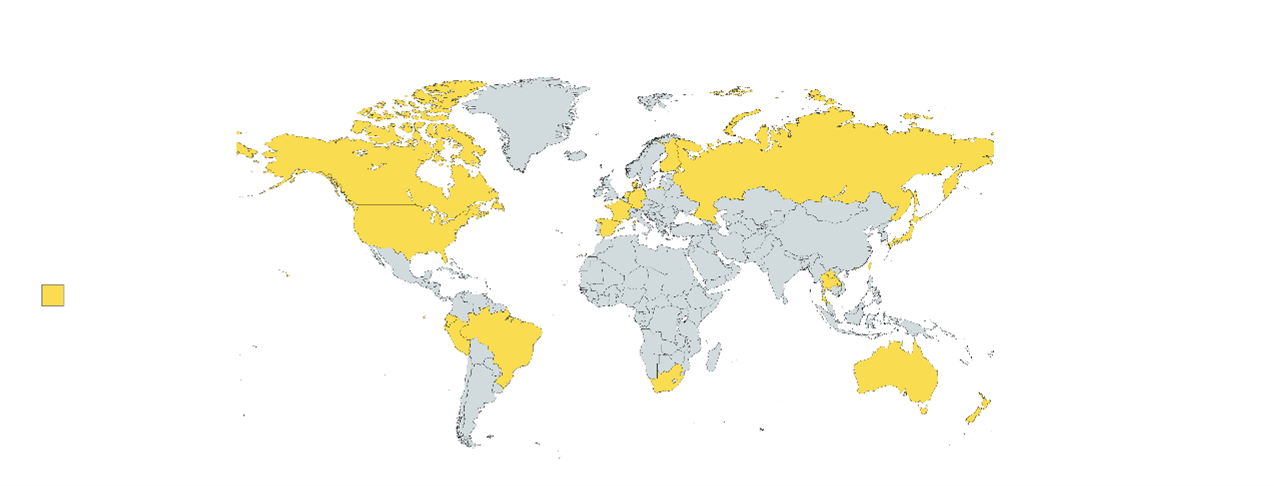
I developed a custom map highlighting Belco's partner countries using their brand colors. Early feedback suggested not placing it on the homepage immediately, but rather adding clear instructions for users on how to interact with the map feature.
User Research & Testing
During a UX class, we held mock user tests. I worked together with my teammate on coming up with the questions we needed to ask. We asked the user to go through the page and see if it was easy to navigate, and I took notes throughout the whole process.
I could've prepared this better, but I didn't give myself enough time in advance, something I'll definitely keep in mind for future tests and interviews. Preparing your setup beforehand is essential. The prototype also wasn't quite ready yet, which made the test less effective, so that's another thing to keep in mind.
We also got feedback from the teacher on how to run better user tests. For example, it's important to connect with the user and make them feel comfortable so they're more likely to share honest feedback and put in real effort during the session.
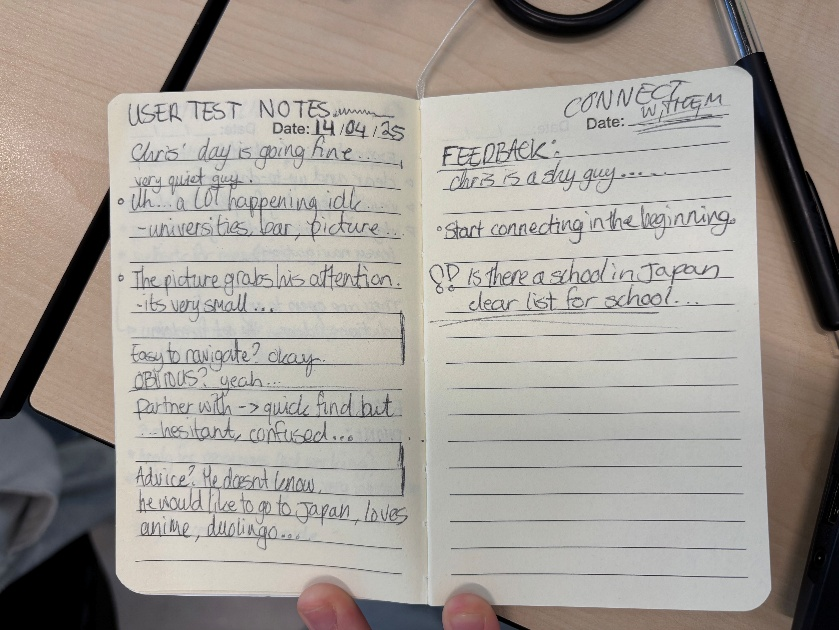
Outside of class, I also conducted a real interview with a user and did a user test on Belco's old website. We started with some general interview questions like "Have you ever considered studying abroad?" and "What tools would help you decide on a program?" this helped me better understand what kind of user I was working with.
Then we moved on to the test itself, where I asked the user to imagine they were looking for more information about studying abroad and to navigate the site as if they were really doing that.
Some key findings:
- The user wanted to see clear program possibilities.
- They were looking for more detailed information about costs.
- They preferred a step-by-step guide combined with a video format when it came to understanding the overall application or study process.
- They also wanted to be able to filter their search results by country, study, and cost.
This kind of feedback is super valuable when working on UX design and will definitely inform future decisions.
One takeaway for me: I need to start the research and testing phase earlier in the project. That way, I can hold more interviews and tests and gather more accurate, diverse user data, which in turn will help me design better, user-focused products.
Team Collaboration
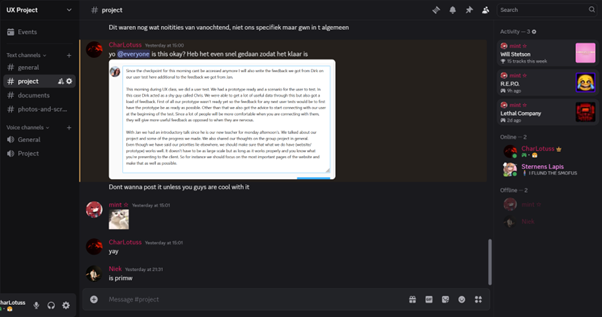
During this project, I worked with the same team as in the branding project. This time, I took the initiative to set up a Discord server instead of a WhatsApp group, so we could better organize our communication. I created separate channels for things like photos, documents, and general project discussion.
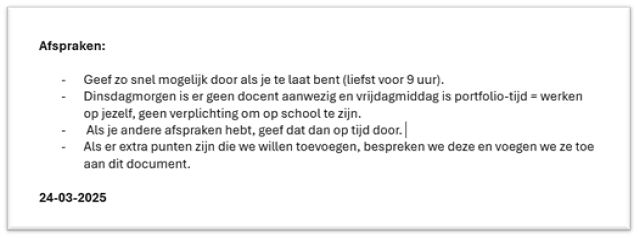
To make sure we were all on the same page, I also set up a simple collaboration agreement, which I discussed with the team. This included basic but important rules like:
- Letting the team know as soon as possible if you're going to be late
- Clearly marking the moments in the week when we don't need to be present for the project, so everyone knows when they have time for themselves
- Letting the team know when you have external appointments, so we're all aware when someone is unavailable
- Adding any new agreements or updates to the document as needed
I set this up at the beginning of the project, and I think it worked better than in the branding project because it gave us a clearer overview of everyone's availability and general expectations.
For future projects, I think a setup like this could be even more detailed, especially when it comes to agreements about the actual project content and how we divide work. Still, this was a step in the right direction, and I'll definitely be using this approach again.
Personal Reflection
When it comes to this project, I have a lot to reflect on and lessons to take forward. During this project, I led the team in creating a UX design for the Belco Alliance website. The work itself wasn't too difficult, but there were several challenges along the way.
One key area I need to improve is the research phase. While I made some progress in collaborating with my teammates, from the very start, both I and my teammates were unhappy with the stakeholders. They were often disappointing, promises like sharing their brand guide were never fulfilled, and communication mostly happened only during scheduled meetings. The stakeholder was also not very pleasant to work with.
I can understand the disappointment, as there wasn't much content to work with. Despite my efforts to improve teamwork and research, I only managed to design an interactive map, and I wish I could have done more.
During the project, there were shifts in teachers, and I had some personal issues at home that affected my focus. Despite all this, I still learned valuable lessons for the future.
I need to learn how to handle difficult stakeholders and manage their expectations better. Even though my motivation was low from the start, I need to find ways to stay motivated and deliver good work while making the process enjoyable again.
Like with the branding project, I prepared the final presentation using Figma. The teamwork for this presentation was better than before, which the stakeholder also noted after the presentation. Working with Figma it was also easier to create cohesive slides with relevant themes. During the actual presentation however, the quality on the screen was not according to expectations. This is something I will keep in mind for next project presentations.
In conclusion, for future projects I need to address communication issues earlier and be more proactive and assertive when dealing with stakeholders. Fortunately, the stakeholders were flexible with meeting formats, since they weren't always physically available, they made themselves accessible online via Teams.