"Professional standard: You apply professional practice, both individually
and in teams, in the areas of project organisation, communication with
stakeholders, exploratory research, and reporting."
This learning outcome focuses on developing professional skills
in team collaboration, project management, and effective
communication with stakeholders.
Below, you'll find the supporting evidence for this learning outcome, each collapsible includes a short
explanation, screenshots, and access to the source code.
LOG
Throughout the semester, I kept a log where I made simple notes about what I did each day. These
were short, quick entries, just enough so I could look back and remember what I worked on when I
needed to document things later. The log itself wasn't very formal and sometimes included personal
reminders, so I won't be sharing the entire thing. However, I will share an excerpt that represents
a typical entry.
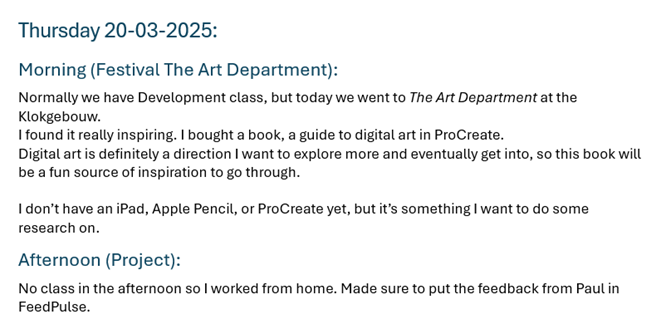
Below is a screenshot from March 20th. That day, we went to The Art Department instead of having our
regular classes. I've written more about this day in detail under LO5: Personal Leadership. In my
log, I noted that we visited the event and that I worked from home in the afternoon since there were
no scheduled classes.
Writing things down like this helps me remember what I did and when, which is exactly how I'm now
able to include it properly in my portfolio.
Screenshot of Excerpt from Log
Task Management & Trello Boards
A very important part of any project is making sure you have a proper planning system. At the very
least, there should be a clear task division, broken down into smaller steps—so you know exactly
what needs to be done and when.
I'll be honest: planning has been a challenge for me this whole semester. During the first two group
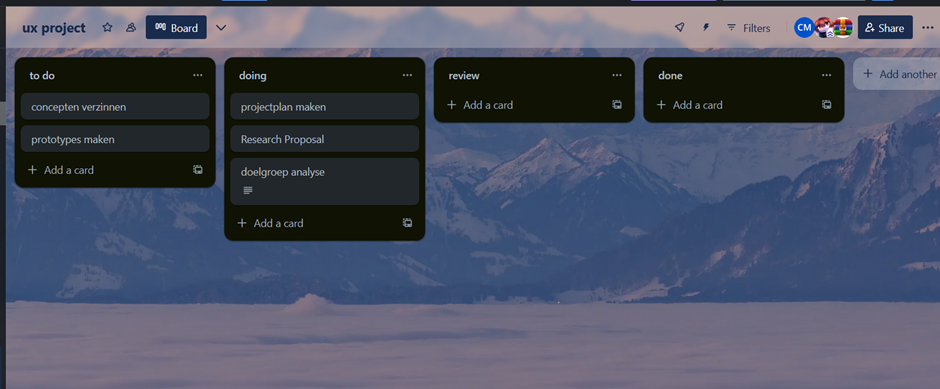
projects, there were attempts to stay organized using Trello boards. For example, in the Trello
board for the UX project, we initially tried to structure our group work—but it never really worked
out. I've also struggled to make personal planning for myself, often because I felt too tired or
overwhelmed to even think about it until a deadline was looming.
Through this experience, I've come to the conclusion that Trello just doesn't work for me. Even
though it's been recommended and some groups have tried using it, the idea of constantly updating
and checking an online planning tool doesn't fit my working style.
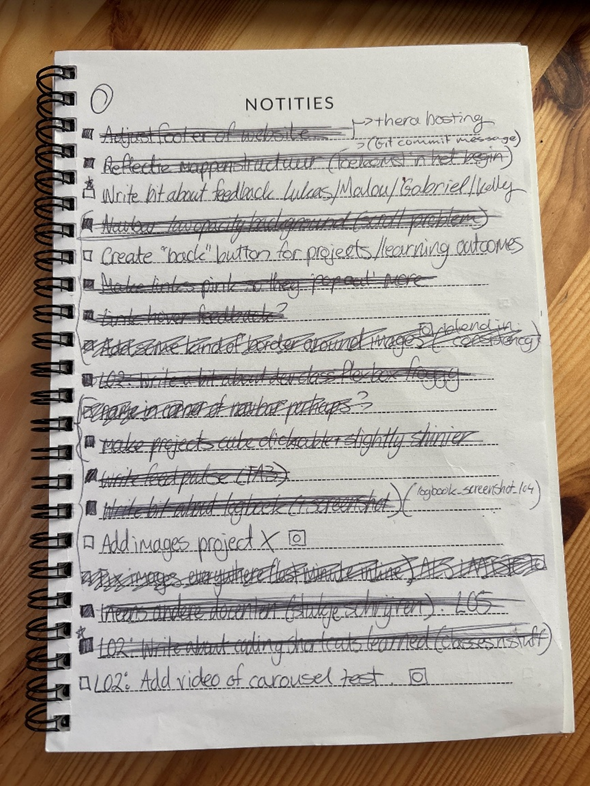
As the semester came to an end and things got more hectic, I switched things up and decided to write
out a physical to-do list instead. I listed every little task I had to do—broken down into very
small, manageable chunks. I found this method incredibly helpful, especially when I was feeling
overwhelmed or unmotivated. Picking one small task, getting it done quickly, and physically crossing
it off gave me a little rush of dopamine and a sense of satisfaction. That small win helped me push
through and get more work done.
So, I've definitely learned something here: a physical to-do list works way better for me, and I'm
planning to use this approach more consistently next semester during Media Creation. One improvement
I already see for myself is starting this system earlier in the project and organizing tasks by
topic or category so everything's clearer at a glance.
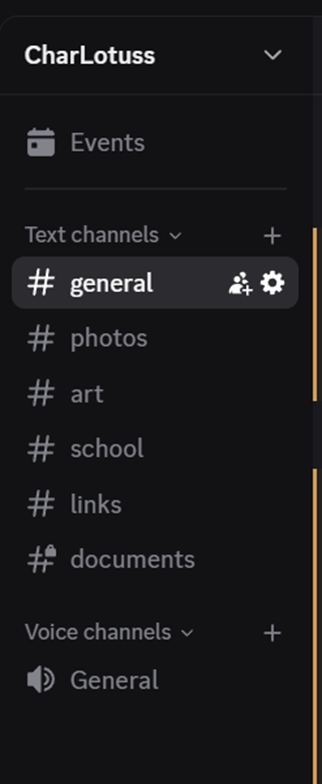
On top of that, something I started doing in group projects—setting up Discord servers with channels
for things like schoolwork, images, and documents—I've now started using for my personal projects
too. It really helps keep everything organized and separated by type, and I want to continue that as
well.
Screenshot Trello BoardImage of Planner with To Do ListScreenshot Discord Server
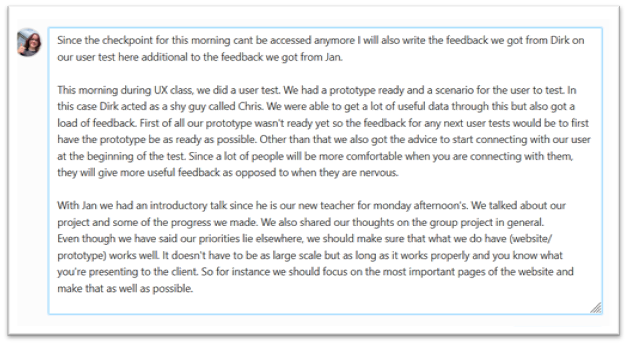
Notes and FeedPulse Checkpoints
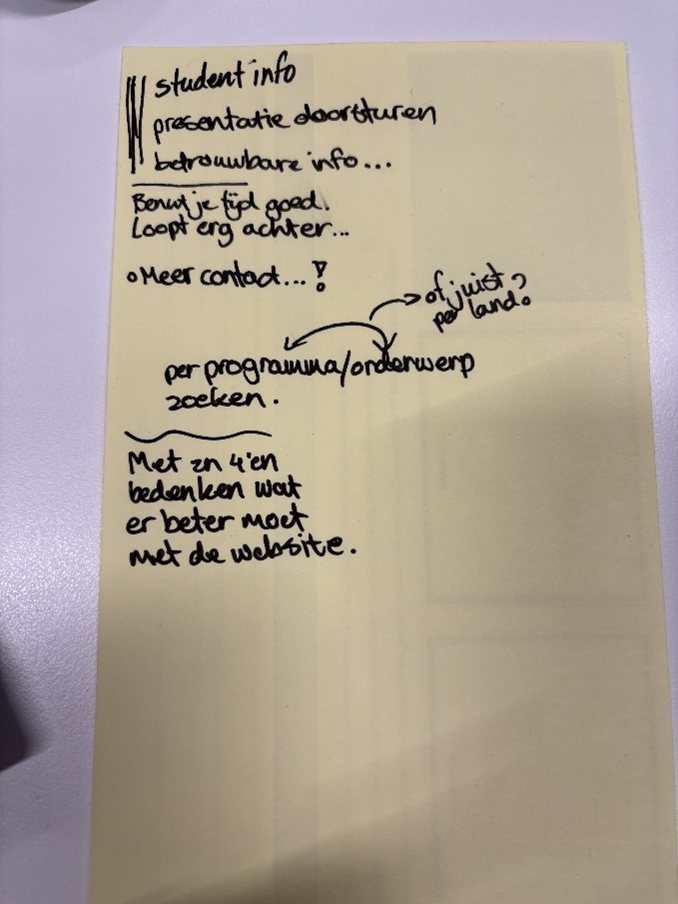
In the picture below you see notes I took during the first meeting for the UX project.
Note to self: always make sure to have proper pen and paper or other substitue ready to take proper
notes.
Picture of Notes
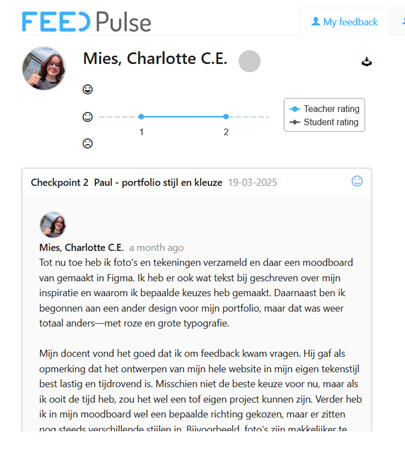
Checkpoints First Assessment
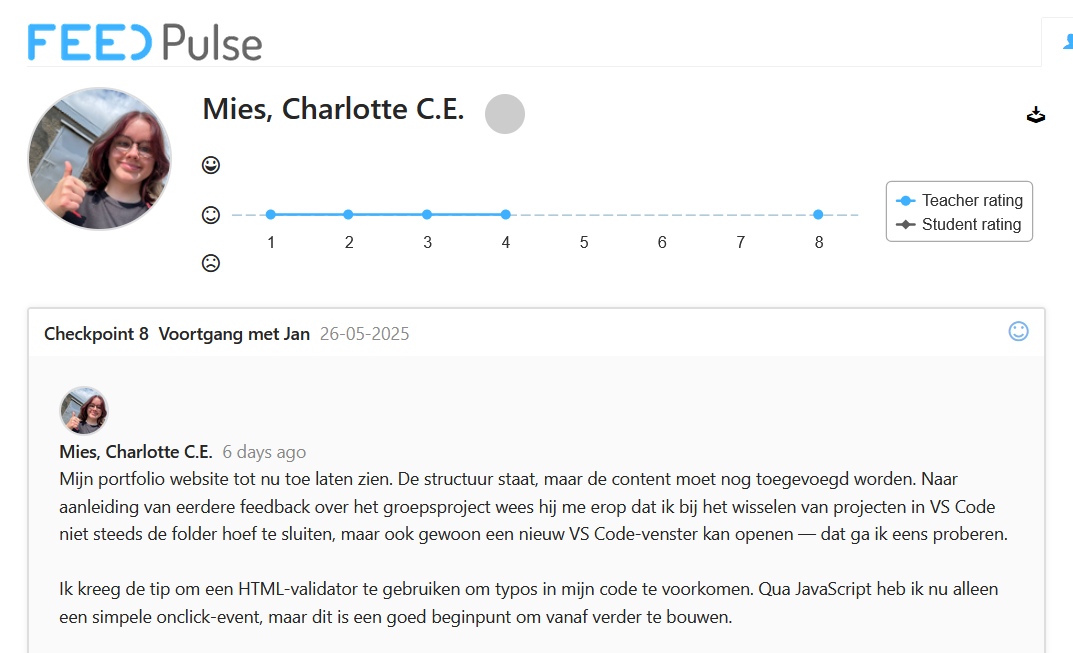
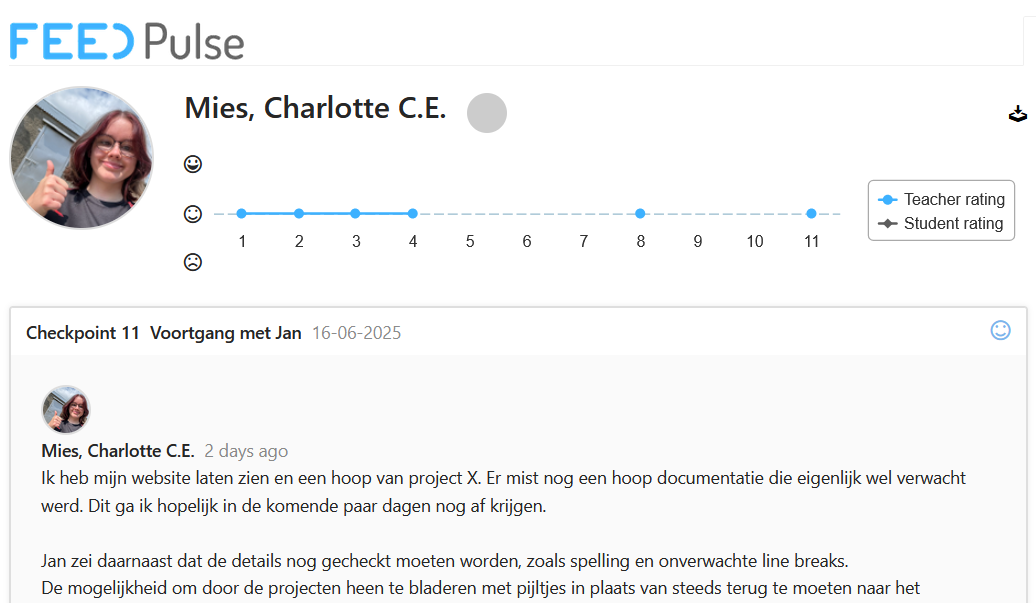
Checkpoints After Third AssesmentCheckpoints Final Review
Reflection
I have been steadily growing when it comes to professional standards. Like I have also mentioned in
other projects, this semester was a struggle. This did not stop me from improving my LO4, however. Once
I realized I needed help, I improved when it came to asking for feedback from teachers more often. This
is something I will continue building upon, and I have a long way to go until I feel comfortable with
it, but I have made improvements to be proud of.
I also kept going with my own logbook throughout the semester. This was also a personal thing, but I
implemented a little bit of this in my portfolio after the recommendation of my assessor during the
third assessment.
Alongside this logbook, I also implemented the Discord server for myself just like the group projects.
Transferring files and organizing them is incredibly easy with Discord, and it’s definitely something I
want to keep doing.
I have conducted more research for my Project X and asked for feedback from users and documented this
better than I did beforehand. This is, however, still an area of improvement, as I only started doing it
towards the end of the semester for my own portfolio and Project X.
While I am happy with the way I work in a group, I have found out there is still a lot to learn. During
every group project, I felt my team members weren’t as motivated, and that made me take it upon myself
to try and lead the project. This is a lot harder than it seems, and I need to actively research ways to
properly lead a project and ask for feedback in this area as well.
My stakeholder communication during the branding project was fine. From stakeholder meetings to WhatsApp
group communications, I kept the stakeholder updated.
This, however, did not go as well for UX and development (both projects having the same stakeholder), as
the stakeholder was difficult to reach. I need to learn how to deal with difficult stakeholders a bit
better and really learn how to be more assertive when there’s no response or not the response that is
expected.
In conclusion, I have improved on quite a few areas like asking for feedback and personal organisation
but need to keep doing these things regularly to really prove myself.
This is also something I will tackle with the help of Student+.